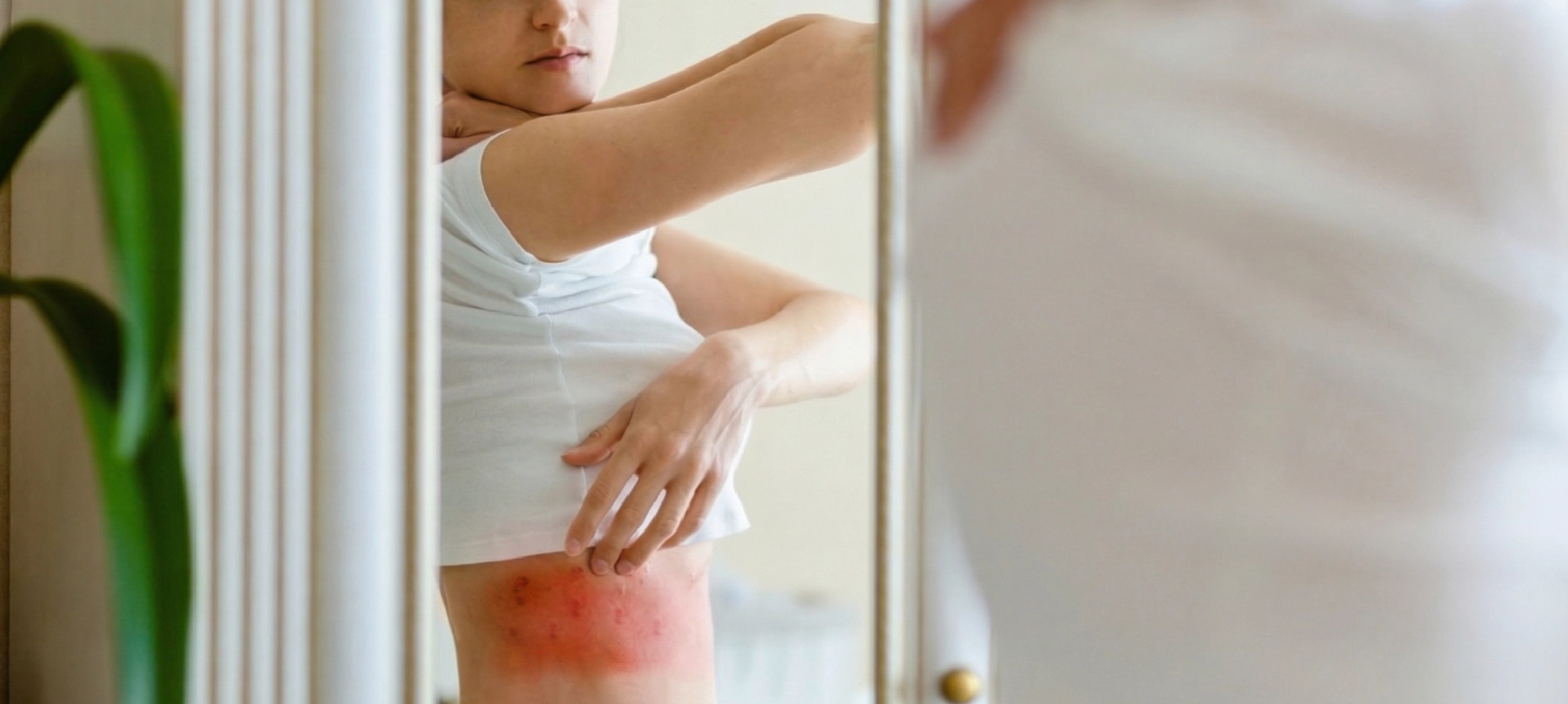
Redness, patches, itching… when your skin reacts, it’s not always easy to understand what’s going on. Among the conditions most often confused are eczema and shingles.
Even if they may look similar at first glance, these two conditions are quite different. They don’t have the same cause, don’t present the same way, and aren’t treated the same.
Here’s a simple guide to help you understand the difference between eczema and shingles, recognise their symptoms, and know what to do.
Eczema, also known as atopic dermatitis, is an inflammation of the skin. It’s a common, non-contagious condition that often comes and goes in flare-ups.
It is linked to a combination of factors, including a genetic predisposition and an overreaction of the immune system to certain environmental triggers.
Symptoms of eczema
Eczema symptoms can vary from person to person, but commonly include:
A key feature of eczema is the well-known “itch-scratch cycle”: the more you scratch, the more the skin becomes irritated… and the more it itches.
Shingles is caused by the reactivation of the chickenpox virus, which remains dormant in the body after an initial infection, sometimes for decades.
It occurs more often with age or when the immune system is weakened, but it can affect anyone who has had chickenpox.
Symptoms of shingles
Shingles usually follows a fairly typical progression:
Unlike eczema, shingles is typically described as painful rather than simply irritating.
It’s not surprising that the two are mixed up, especially in the early stages.
In the first few days, shingles can cause itching or unusual skin sensations before blisters appear. At that stage, it may look like an eczema flare-up.
In both cases, you may also see:
It’s often the evolution of symptoms and their distribution on the body that help tell them apart.
Here are the key points to remember:
Making the right distinction is essential, because treatments for eczema and shingles are not interchangeable. For example, using certain eczema treatments on shingles could make the situation worse.
If you’re unsure, you can use an online dermatology analysis tool. Simply upload two photos of your skin and the AI-based tool will analyze them.
Although neither condition can be completely cured, effective treatments are available to relieve symptoms.
Treatment for eczema
Management mainly focuses on controlling symptoms and preventing flare-ups:
Eczema symptoms can often be managed without seeing a doctor. However, in more severe cases, prescription treatments may be needed.
Treatment for shingles
If shingles is suspected, it is strongly recommended to consult a doctor, ideally as soon as possible.
Treatment is most effective when started early, often within the first 72 hours after symptoms appear:
Early treatment can also reduce the risk of persistent pain after the rash.
Eczema and shingles are not the only causes of rashes or redness.
For example:
These conditions can sometimes add to the confusion, which is why it’s important to carefully assess symptoms and seek advice if needed.
Certain signs should prompt you to seek care without delay:
If in doubt, it’s best to check sooner rather than later. An evaluation helps confirm the diagnosis and start the right treatment at the right time.
Visit the Bonjour-santé website to book an appointment with your family doctor or find a walk-in appointment at a clinic in your area. From the Bonjour-santé site, you can also chat with the AI assistant BonsAi. Simply describe your symptoms, and it can guide you on the next steps.
You can also consult your local pharmacist at any time for advice.
Finally, a Bonjour-santé membership gives you access to a wide range of services to support your care journey: unlimited e-consults with Bonjour-santé nurses, virtual consultations with pharmacists to get prescriptions without having to leave home, an online dermatology analysis tool, help finding appointments with specialists, including dermatologists, exclusive discounts on private healthcare services, and more.