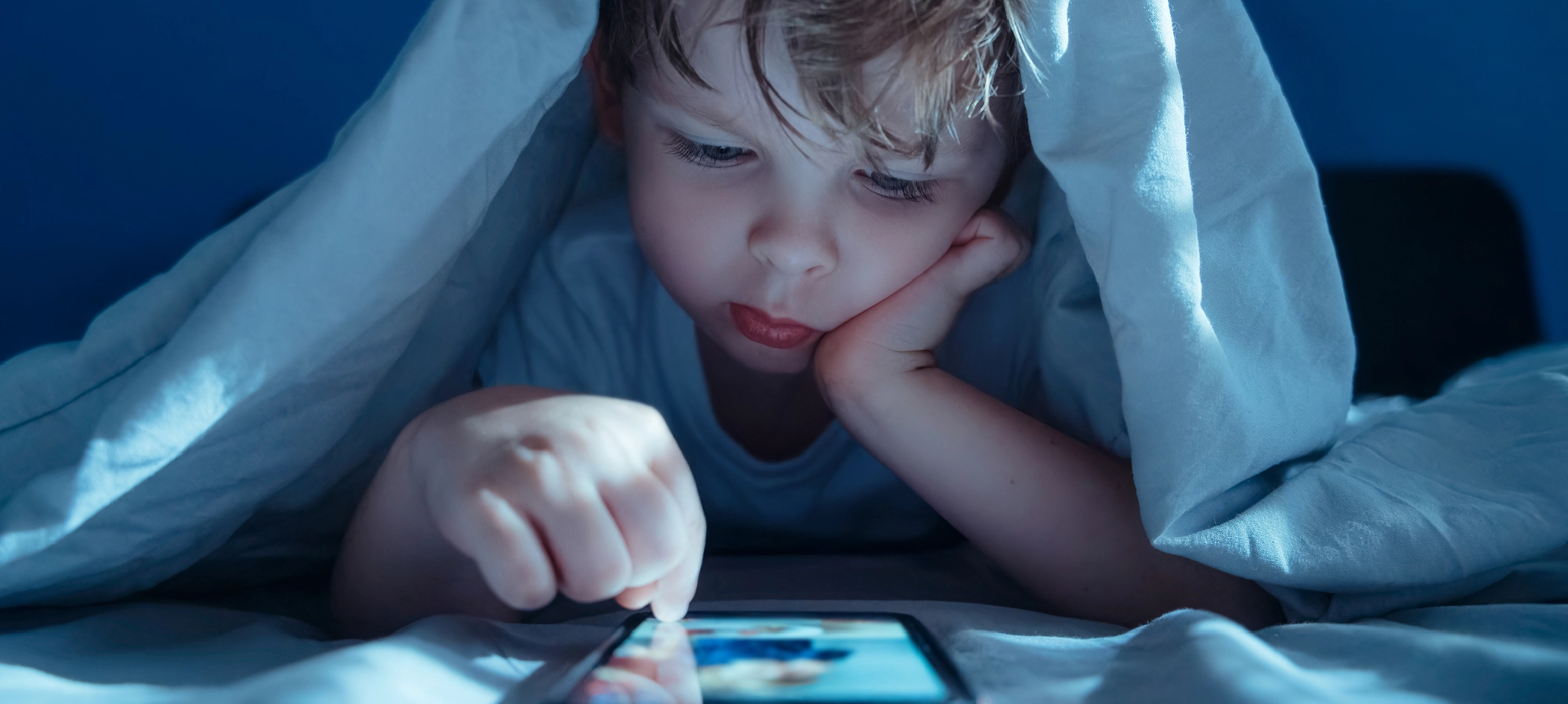
After a summer of looser schedules, less structure and perhaps a few more relaxed rules, going back to school naturally means getting back into a more predictable routine. And that includes screen time.
TV, tablets, video games, phones… it’s easy for screen habits to shift during the summer. Kids have more free time, days look different and, let’s be honest, a screen can sometimes give parents a few precious minutes to make dinner, answer an email or simply take a breather.
There’s nothing wrong with that. The goal isn’t to make parents feel guilty or ban screens, but rather to rethink the role they play now that the school routine is back.
Here are a few habits worth revisiting to help your family find a healthy balance.
As kids go back to school, certain moments of the day become key points in the family routine again: waking up, homework, dinner and bedtime.
So now is a good time to decide when screens have a place in the day… and when they should be put aside.
For example, you might decide to create screen-free times:
You don’t have to change everything at once, back to school season is already challenging enough. However, a few simple, consistent rules can already make a difference.
We often hear about “screen time,” but how children use screens matters just as much.
An hour spent watching an educational video with a parent, doing a creative activity or researching a school project isn’t the same as an hour (or two… or three) spent scrolling through social media. (A quick aside: British doctors recently published a study arguing that social media poses a danger to children on a scale comparable to smoking!)
Rather than watching the clock alone, ask yourself a few questions:
The American Academy of Pediatrics also recommends an approach that goes beyond setting a fixed time limit: the 5 Cs. This approach encourages parents to consider the child, the content, how screens are being used to calm down, what screen use may be crowding out, and communication within the family.
Screen use becomes more concerning when it starts taking up too much space and interfering with the activities children need to thrive.
Before focusing on reducing screen time, ask yourself whether the day still includes the basics:
Sleep. Movement. Meals. Learning. Play. Social connection.
If screen use regularly pushes all of these things to the side, it may be time to rethink your family’s habits.
For example, a child who stays on their phone late into the evening and doesn’t get enough sleep the next day isn’t getting the same benefits as a child who uses their phone to unwind after finishing their homework, getting some physical activity and having dinner.
Let’s be honest: when days are long and parents are overwhelmed, a screen can be a very easy go-to to keep your kid occupied or help them calm down.
And that doesn’t make you a bad parent.
Watching a show while you make dinner? Playing a video game when you need 30 minutes to yourself? Putting on a cartoon while you finish an urgent task? That’s often just part of family life.
The problem is when a screen becomes the automatic response to boredom, impatience or difficult emotions.
If your child automatically asks for a screen whenever they’re bored or upset, gradually try offering other ways to keep busy or calm down:
Boredom is part of childhood, too. Children don’t need to be entertained all the time. Learning to embrace boredom and solitude is an important part of growing up.
Going back to school also means going back to earlier mornings. If sleep schedules have shifted over the summer, screens can make it harder to get back into a regular routine.
Try to:
For children who use a device to listen to music, a story or a meditation before falling asleep, the goal isn’t necessarily to eliminate the device altogether, but to make sure its use remains limited to that purpose.
Family habits change as children grow, their needs evolve and the devices they use change. So the rules that worked last year may not necessarily be the right ones today.
Rather than imposing a whole new set of restrictions overnight, use the start of the school year as an opportunity to talk about it together.
You might decide together:
This conversation is also a good opportunity to reinforce something important: the rules aren’t there to punish children, but to make room for everything they need throughout the day.
It’s normal for a change in habits to be met with some resistance, especially if the rules were more relaxed over the summer.
However, certain signs may indicate that screens are taking up too much space, particularly if your child:
If these difficulties persist or start interfering with everyday life, it may be worth discussing them with a healthcare professional.
Going back to school doesn’t mean going from a relaxed summer to a routine where every minute of screen time is tracked.
Think of it as a reset, not a complete overhaul.
Screens can have a place in children’s lives. What matters is making sure they don’t take over and replace sleep, physical activity, relationships, play and the other activities that are essential to their well-being.
And above all, give yourself some flexibility. Healthy habits don’t all fall into place in a single day. The start of the school year is simply a good time to get back into a rhythm, one small adjustment at a time.
Can screen time affect children’s mental health?

Can screen time affect a child’s development?
How can I tell if my child is spending too much time on screens?