Summer is the season for vacations, swimming, hiking and long days spent outdoors. But between the heat, sweat, sun exposure and humidity, our skin can sometimes decide to make things a little more complicated.
Heat rash, sunburns, itching, irritation, fungal infections… several skin problems become more common during the hot summer months.
Let’s talk about it! Here are some of the most common summer skin problems, along with simple steps and healthy habits that can help prevent them and keep your skin healthy throughout the season.
Our skin is our body’s first line of defence against the environment. During the summer, it has to deal with several factors that can make it more vulnerable:
All of these factors can lead to different skin reactions. Some are simply uncomfortable, while others may require treatment.
Heat rash, also called miliaria or “prickly heat,” is one of the most typical summer skin problems.
It happens when the tiny ducts that allow sweat to reach the skin’s surface become blocked. The sweat then gets trapped under the skin, causing a rash.
Heat rash is especially common in babies and young children, since their ability to regulate their body temperature is still developing.
What does heat rash look like?
It often appears as:
It usually develops in areas where sweat collects or where skin rubs against clothing:
How to relieve heat rash?
The goal is simple: help your skin stay cool and dry.
A few helpful tips:
Most cases of heat rash go away once the skin returns to a normal temperature.
Summer is often considered to be the time when skin looks more radiant. But for some people, it is actually the season of breakouts.
Heat naturally increases the production of sebum (the oil produced by the skin). When sweat, sebum, bacteria and certain skincare products build up, pores can become clogged and lead to acne flare-ups.
The areas most commonly affected are the face, neck, back and chest.
How to reduce summer breakouts?
A few simple habits can make a big difference:
Keep in mind: heat rash (mentioned above) is not acne and should not be treated the same way.
Fungi thrive in warm, damp environments. That’s why certain skin infections become much more common during the summer.
After a day at the beach, an intense workout or several hours spent in closed shoes, your skin can stay damp long enough to create the perfect environment for fungi to grow.
Some of the most common fungal skin infections include:
Athlete’s foot
Athlete’s foot mainly affects the skin between the toes or on the soles of the feet.
Symptoms may include:
It is more common during the summer because of sweaty feet, closed shoes and exposure to damp surfaces such as locker rooms or pool decks.
How to help prevent fungal infections?
A few simple habits can go a long way:
Over-the-counter antifungal creams are often effective for mild infections. However, if the infection persists despite treatment or appears to be getting worse, book an appointment with a doctor.
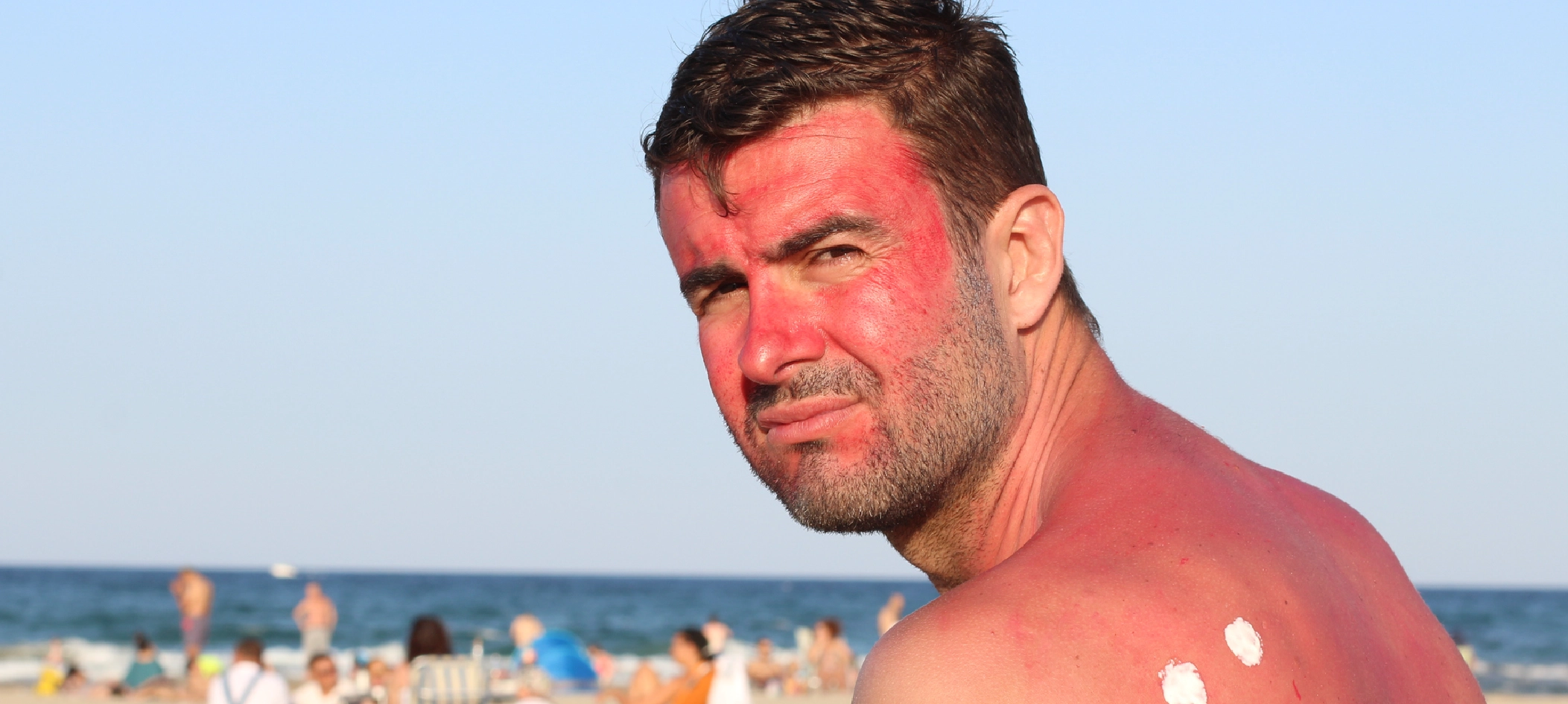
When we think about summer skin problems, sunburn is usually the first thing that comes to mind, and for good reason. Prolonged exposure to UV rays can quickly damage the skin.
But sun exposure can also trigger other skin conditions that are less well known.
A sunburn occurs when your skin is exposed to too much ultraviolet (UV) radiation. Symptoms may appear a few hours after sun exposure and become more intense over time.
Besides being painful, repeated sunburns increase your risk of developing certain types of skin cancer later in life.
What should you do if you get a sunburn?
To help your skin recover:
Prevention is your best protection
A few simple habits can greatly reduce sun damage:
Some people develop a reaction that resembles an allergy after spending time in the sun. The most common form is called polymorphous light eruption (PMLE).
Unlike a sunburn, which mainly causes redness and pain, this reaction often causes:
It typically appears on areas exposed to the sun, such as the neck, upper chest, arms and hands.
Certain medications can also make your skin more sensitive to sunlight. This includes some antibiotics, anti-inflammatory medications and other prescription drugs. If you're unsure whether one of your medications increases your sensitivity to the sun, ask your pharmacist or another healthcare professional.
How to reduce your risk of a sun-related skin reaction
Melasma is a pigmentation disorder that causes brown or grey-brown patches, most often on the face. Although these spots are harmless, they can become more noticeable during the summer.
Why? Because sunlight stimulates the cells that produce melanin, the pigment that gives skin its colour. Heat and inflammation caused by environmental factors can also make pigmentation more pronounced.
The cheeks, forehead, upper lip and bridge of the nose are the areas most commonly affected.
How to help reduce melasma during the summer
Tinted sunscreens containing iron oxides may also be beneficial, as they provide additional protection against visible light, which can worsen certain types of pigmentation.
Summer means pools, lakes and beaches. But spending time in the water can sometimes lead to unexpected skin problems.
Swimmer’s itch (also called cercarial dermatitis) is a skin reaction caused by microscopic parasites found in certain lakes and ponds.
After swimming, it can cause:
Children are especially susceptible because they tend to spend more time in shallow water.
How to reduce your risk of swimmer’s itch?
Swimmer’s itch usually clears up on its own, but cool compresses or over-the-counter anti-itch products can help relieve discomfort.
Even a well-maintained pool can sometimes irritate your skin.
Chlorine may:
To help protect your skin:
If you're travelling to certain warm destinations, you may encounter another type of skin reaction known as seabather’s eruption.
This rash is caused by tiny jellyfish or sea anemone larvae that become trapped between your skin and your swimsuit.
It typically causes:
The best way to prevent it is to check local swimming conditions before entering the water and rinse your skin as soon as you get out of the ocean.
Summer is the perfect time for hiking, camping, gardening and picnics. But as much as we enjoy spending time outdoors, nature can sometimes be hard on our skin.
Poison ivy can trigger an allergic skin reaction in many people because of an oily substance called urushiol, which is found in the plant's leaves, stems and roots.
After coming into contact with poison ivy, you may develop:
The rash may appear several hours or even several days after contact, which is why it is not always easy to connect it to a recent outdoor activity. (To learn more about poison ivy, check out our blog article on the subject!)
What should you do after coming into contact with poison ivy?
Mosquitoes, black flies, wasps, bees and ticks are among summer’s least welcome visitors.
Most insect bites simply cause:
However, some situations require more attention.
For example, ticks can transmit Lyme disease in certain regions. After spending time in wooded or grassy areas, it is recommended to check your skin—and your children's—for ticks. (To learn everything you need to know about ticks, read our blog article!)
How to relieve an insect bite?
How to help prevent insect bites?
A few simple habits can help:
Most minor skin problems that occur during the summer can be managed with simple at-home care. However, it's best to seek medical advice if:
If you're unsure what's causing a rash or another change to your skin, it's always better to seek advice rather than wait for it to get worse.
For a first assessment, you can use BonsAi, Bonjour-santé's free AI-powered health assistant. BonsAi can help you analyse your symptoms, better understand what may be causing them and recommend the next steps. If appropriate, it can also guide you toward booking a medical appointment, or you can search for an appointment directly through the Bonjour-santé platform.
With a Bonjour-santé membership, members can also consult a nurse or a pharmacist by e-consult anytime, without leaving home.
This summer, enjoy the sunshine, your vacation and the great outdoors, while giving your skin the care it deserves!
What's the difference between a heat rash and an allergic skin rash?

Can chlorine cause a skin rash?
When should I see a doctor or pharmacist for a summer skin problem?