Health and well-being

Everything you need to know about plantar warts

22/5/2026
6 min

Walking barefoot by the pool, slipping on sandals after the spa, using shared showers at the gym… with summer arriving, our feet are exposed more than ever. And where there’s heat and moisture, there’s also the perfect environment for plantar warts.

Very common, sometimes painful, and highly contagious, they can quickly take the fun out of walking comfortably. The good news? With the right habits, they can be prevented and treated effectively.

Here’s everything you need to know to recognise, prevent, and treat plantar warts.

What is a plantar wart?

Plantar warts are small skin growths caused by the human papillomavirus (HPV). The virus infects the skin, usually entering through tiny cuts or cracks on the bottom of the foot.

Unlike warts on the hands, plantar warts tend to be flatter and harder. Why? Because pressure from walking pushes them inward into the skin.

Even though they’re benign, they are:

  • Contagious
  • Sometimes painful
  • Able to spread or come back

In some cases, they disappear on their own after a few months, or even up to one or two years. But in the meantime, they can be uncomfortable and spread to others.

Symptoms of plantar warts

Plantar warts can be subtle at first and become more noticeable over time.

Common signs include:

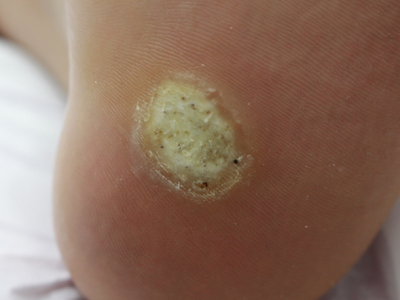
  • A small rough growth on the bottom of the foot (often heel or forefoot)
  • Thickened skin, sometimes resembling a callus or corn
  • Small black dots in the center (clotted blood vessels)
  • Variable color: gray, yellowish, brown, or pinkish
  • Pain or tenderness, especially when walking
  • Feeling like you’re stepping on a small stone
  • Occasional bleeding from friction

Some warts can also affect your walking pattern, leading to discomfort in other areas of the foot or ankle.

Types of plantar warts

Not all plantar warts look the same. The two main types are:

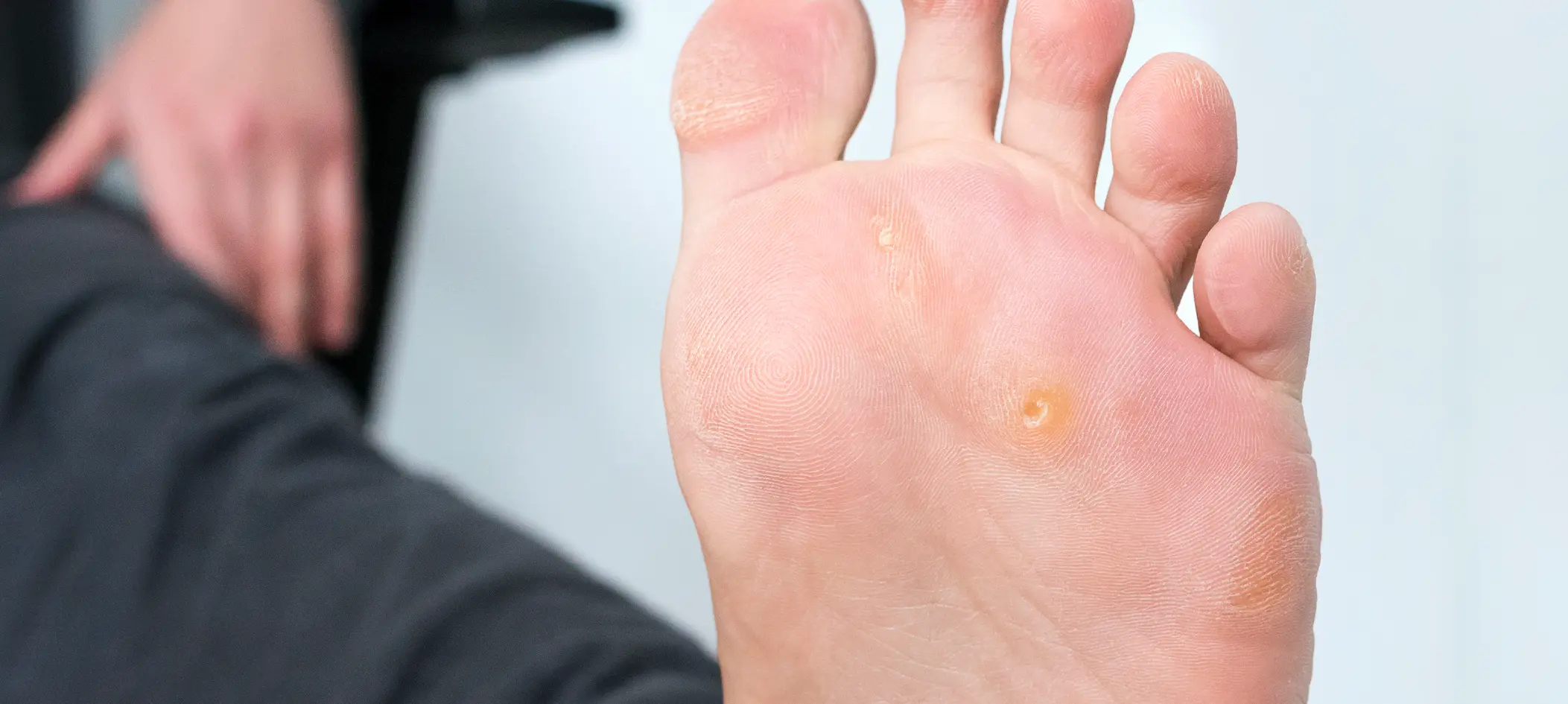
Single wart (myrmecia)

  • Most common type
  • Deep and well-defined
  • Often painful under pressure

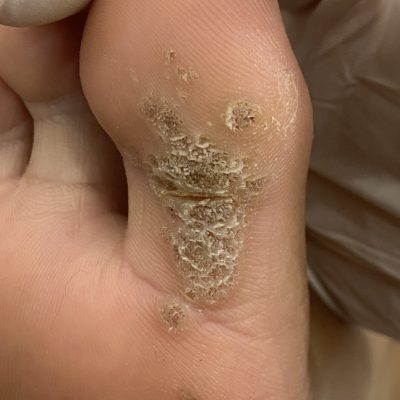
Mosaic warts

  • Clusters of multiple small warts
  • More superficial
  • Usually less painful but more widespread

Regardless of type, they can grow or multiply if left untreated.

What causes plantar warts?

Since plantar warts are caused by a viral infection, they can spread in several ways:

  • Direct contact: skin-to-skin contact with an infected person
  • Indirect contact: contaminated objects (towels, shoes, socks)
  • Contaminated surfaces: warm, damp areas like pools, locker rooms, and public showers
  • Self-spread: touching or scratching a wart, then another area of the foot

HPV can also remain dormant for weeks or months before appearing.

Risk factors

Some people are more likely to develop plantar warts:

  • Children and teenagers (more exposure to humid environments)
  • People with excessive foot sweating
  • Dry, cracked, or injured skin (entry point for the virus)
  • Weakened immune system
  • Frequent use of pools, gyms or spas
  • Walking barefoot in public areas

A large portion of the population will experience them at least once in their lifetime.

Prevention: simple habits that make a big difference

Prevention really is key when it comes to plantar warts. A few simple habits can significantly reduce your risk.

In public places:

  • Avoid walking barefoot (pools, gyms, showers)
  • Wear sandals or flip-flops
  • Wash and dry your feet after exposure

At home:

  • Keep feet clean and dry (especially between toes)
  • Change socks regularly (preferably cotton or breathable fabrics)
  • Air out your shoes

To prevent spreading:

  • Don’t share towels, socks, or shoes
  • Cover any wart with a bandage
  • Avoid picking or scratching it
  • Wash hands after touching it
  • Disinfect objects that come into contact with the wart

These habits are especially important in summer, when warm and humid environments help the virus survive.

Treating plantar warts

While some warts disappear on their own, several treatments can speed up recovery.

Over-the-counter (at-home) treatments

The most common options are salicylic acid-based products:

  • Help gradually remove infected layers of skin
  • Used over several weeks

To improve effectiveness:

  • Soak the foot for 5-15 minutes
  • Gently file the wart (ex.: with a pumice stone you will not use on your skin after using on the wart)
  • Apply product only on the wart

Other options include:

  • At-home freezing treatments (cryotherapy kits)
  • Home remedies like duct tape or apple cider vinegar (results vary)

Professional treatments

If the wart persists or becomes painful, a healthcare professional may recommend:

Early treatment also helps prevent spreading to other areas or other people.

When to see a healthcare professional

When in doubt, don’t hesitate to consult a doctor, podiatrist, nurse, or your local pharmacist, especially if:

  • You’re not sure it’s a wart
  • The wart is painful, bleeding, or changing in appearance
  • It persists, spreads, or keeps coming back despite treatment
  • It affects your ability to walk
  • You have diabetes or a weakened immune system
  • Signs of infection appear

Proper care helps avoid complications and speeds up healing.

Where to start? Visit the Bonjour-santé website to find an appointment with your family doctor or a walk-in clinic in your area. You can also chat with the AI assistant BonsAi directly through the platform; just describe your symptoms and it will guide you to the right care.

Finally, the Bonjour-santé membership also gives you access to a wide range of healthcare services: unlimited e-consults with Bonjours-santé nurses, virtual consultations with pharmacists to get prescriptions from home, an online dermatology analysis tool, help in finding appointments with specialists (including podiatrists and dermatologists), exclusive discounts on private healthcare services, and more.

Are plantar warts a sexually transmitted infection?

Can plantar warts bleed?

What is the difference between a plantar wart and a corn?

25%
discount on an evaluation by a dietitian-nutritionist
Need nutritional counselling, support or plan? Book an appointment with our ÉquipeNutrition partner in just a few clicks. E-consult or in person.

Paid service, 25% discount on the evaluation.
Ask questions to our dietitians-nutritionists - FREE for members
This service is ideal for members who have quick questions or need general advice that do not require a nutritional evaluation, counselling or follow-up.

Questions are answered within 72 h.
Health and well-being

Everything you need to know about plantar warts

Bonjour-santé
|
22/5/2026
6 min

The Ultimate Guide: 5 steps to decipher nutrition labels at the grocery store

Bonjour-santé
|
7/5/2026
5 min

Eczema or shingles: how to tell the difference?

Bonjour-sante
|
14/4/2026
6 min