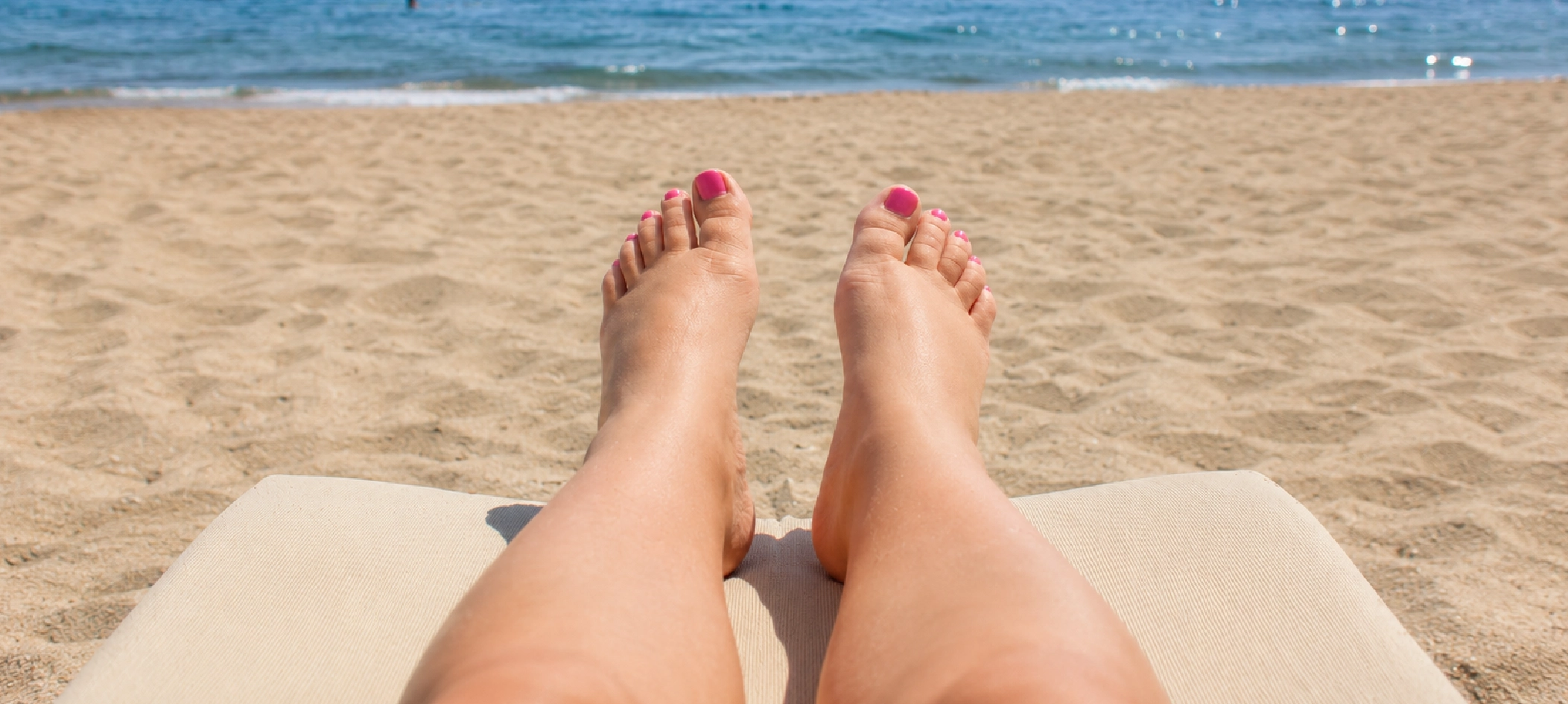
Summer is here. The sun is out, the days are longer, and you're making the most of the warm weather. Everything feels great, until the end of the day when —poof— your sandals suddenly feel tighter, your ankles seem to have disappeared and your legs feel heavier than usual. Sound familiar?
In most cases, there's no need to worry. Swollen feet and ankles during hot weather can be uncomfortable, but they're also very common, especially among women.
In this article, we'll explain why your legs and ankles tend to swell in the summer, what you can do to ease the discomfort, and which warning signs could point to a more serious health issue that deserves medical attention.
The main culprit: your body's natural cooling system.
When temperatures rise, your blood vessels naturally widen to help your body release excess heat. While this allows more blood to circulate near the skin's surface, it also has a downside: some fluid can leak from the blood vessels into the surrounding tissues.
And because gravity is doing its thing, that fluid tends to settle in the lowest parts of the body: legs, ankles and feet. The result is swelling, also known as edema or heat edema.
In some people, this condition is exacerbated when the small valves in the veins of the legs do not function as effectively. Blood has a harder time travelling back up to the heart, which can lead to even more fluid buildup in the lower body.
Anyone can experience swollen legs during a heat wave, but certain factors can increase the risk:
1. Stay hydrated
It may sound counterintuitive, but dehydration can actually contribute to fluid retention. When your body doesn't have enough water, it tries to hold on to every drop it can.
Drink water regularly throughout the day, especially during hot weather.
2. Keep moving
Walking is one of the best ways to support healthy circulation. Even a 20- to 30-minute walk helps your calf muscles act as a natural pump, pushing blood back toward your heart.
Swimming and water aerobics are also excellent summer-friendly options.
3. Elevate your legs
When sitting or lying down, try raising your legs slightly above heart level for a few minutes.
At night, placing a pillow under your legs can sometimes make a noticeable difference.
4. Cool your legs down
After a shower, finish with a cool stream of water, moving upward from your ankles toward your thighs.
This simple habit can help stimulate circulation and provide quick relief.
5. Cut back on salt
A diet high in sodium can lead to fluid retention.
You don't need to eliminate salt completely, but it helps to limit highly processed foods such as:
6. Avoid staying in the same position for too long
If you work at a desk, get up and move around regularly.
If you are standing for long periods of time, try doing a few ankle movements or taking short walking breaks whenever possible.
7. Wear comfortable footwear
Shoes that are too tight can make swelling feel even worse.
If swollen feet and ankles are a recurring issue, choose footwear that provides enough room and proper support.
8. Consider compression stockings
For some people, compression stockings can significantly improve circulation and help reduce swelling.
Your pharmacist can help determine which type is best suited to your needs.
Although heat-related swelling is usually temporary and harmless, some situations deserve medical attention.
Talk to a doctor, nurse or pharmacist if:
In rare cases, these symptoms may be linked to a more serious condition such as a blood clot, an infection, or a cardiovascular problem.
If you'd like to book an appointment with a doctor, visit Bonjour-santé. Bonjour-santé members can also quickly schedule a virtual consultation with a pharmacist or nurse from the comfort of home and receive personalised advice.
Is it normal for my legs to be more swollen at the end of the day?

What is the difference between temporary heat-related edema (swollen legs and feet) and a more serious circulation problem?
How can compression stockings help when you have swollen legs?